
Table of Contents
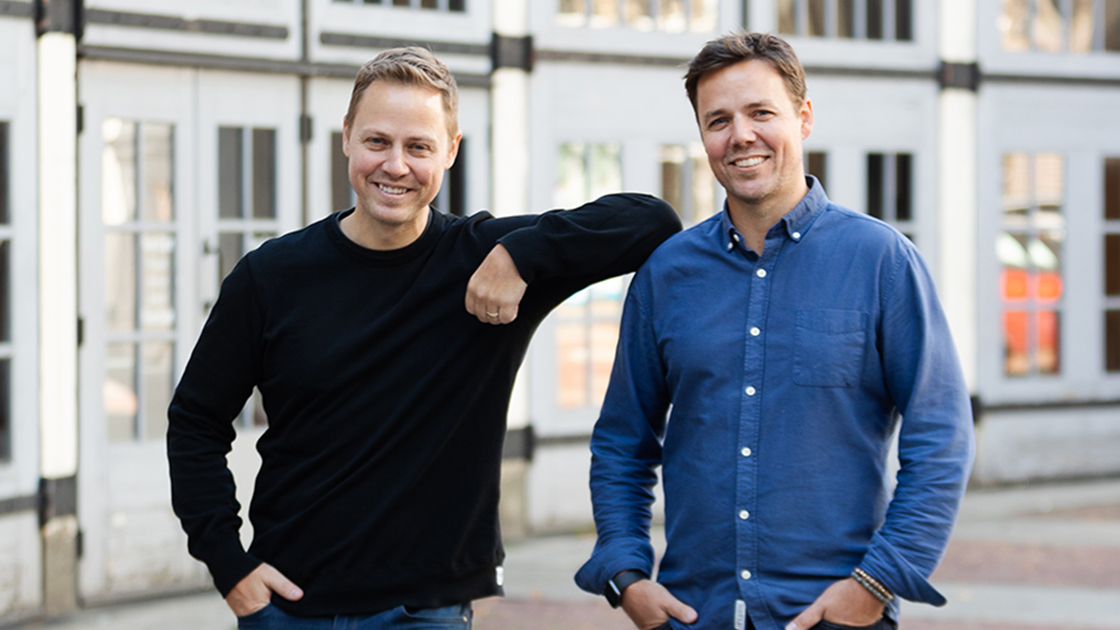
Episode Summary
Listen On: Apple Podcast | Spotify
Port Coquitlam Mayor Brad West is challenging just about every orthodoxy about our province’s future and British Columbians are taking notice. Brad sits down this week with Adam & Matt to challenge the housing crisis narrative, expose how provincial mandates are destroying local communities, lament BC abandoning its resource wealth for service sector stagnation, and reveal why the Cowichan decision poses a greater threat than any housing shortage. From secret provincial legislation developed without consulting a single mayor to court rulings that undermine property ownership itself, West argues BC is living through a historic moment of reckoning. We need a different path forward. What’s really causing affordability pain? Why are housing units sitting vacant while family homes are no longer being built? And can a small city mayor articulate a better path forward than Victoria? This one is for all British Columbians!

Brad West
Brad West was elected Mayor of Port Coquitlam in 2018 with the highest vote total in the city’s history and was acclaimed to a second term in 2022. Previously, he served three terms as a City Councillor. Known for his practical leadership and focus on improving quality of life for families, Brad has helped make Port Coquitlam one of the best cities to live in the province. A lifelong resident, he lives in the community with his wife Blaire and their two sons. He is a graduate of the University of Victoria, St. Francis Xavier University, and completed leadership studies at Harvard University.
Land Claims Now BC’s Biggest Economic Threat in 2025, Says Port Coquitlam Mayor
While drug policy and immigration dominate headlines, Port Coquitlam Mayor Brad West says land claims and property rights uncertainty under DRIPA legislation represent British Columbia’s most serious economic threat. Not close. Not debatable. The single biggest challenge the province faces.
When asked directly whether land claims and reconciliation issues top the list of BC’s challenges, West didn’t hesitate. “Without question in my view, right now. The implications are so far reaching. And because it’s impacting just about every sector of the economy.”
This assessment comes as the Cowichan court decision sends shockwaves through Metro Vancouver’s real estate market, calling fee simple property ownership into question just as BC desperately needs investment capital to stabilize its economy.
What You’ll Learn
- Why fee simple title uncertainty represents a worse economic threat than housing policy, immigration, or drug policy
- How the Cowichan decision impacts property ownership across all BC municipalities, not just Indigenous territories
- What “reconciliation” actually means for property rights (spoiler: the province won’t say)
- Why closed-door negotiations without clear goals are destroying investor confidence in BC real estate
- How DRIPA legislation passed in 14 minutes is now fundamentally reshaping property law
- What Port Coquitlam’s Gates Park land claim reveals about the scope of property disputes across Metro Vancouver
- Why even the premier admitting they’ll amend DRIPA signals the severity of the problem
The Cowichan Decision Changed Everything
The timing couldn’t be worse. BC’s economy is fragile. The province faces historic deficits and debt levels. And then a court decision essentially says fee simple title might not mean what everyone thought it meant for the past 150 years.
“You couldn’t think of a worst thing to happen,” West states bluntly. “At a time where the province is in a very precarious financial position, needs every investment dollar it can muster to be able to create viability and sustainability in our economy here, particularly as we continue to be pressured economically from the United States. So you have this really challenging environment with respect to that. And then you get a court decision that says, well, fee simple title is in question.”
Fee simple ownership represents the highest form of property ownership in British Columbia. It’s how most people own their homes. It’s the foundation of commercial real estate transactions. It’s what allows developers to secure financing, what gives investors confidence to deploy capital.
And now it’s in question.
It’s Happening Everywhere, Not Just Cowichan
Port Coquitlam isn’t exempt. The Coquitlam First Nation filed a claim on municipally-owned property, primarily Gates Park, which serves tens of thousands of residents annually for soccer, field lacrosse, and baseball. The city acquired this property through fee simple purchase. Nobody gave it to them.
“The city acquired the property. It was never provided to us. The province, the crown never said, okay, here’s property for you. It was acquired by the city. And again, it’s a fee simple ownership,” West explains.
This isn’t about crown land or treaty territories. This is about property the municipality bought, owns, and has used for public purposes for decades. And it’s now subject to a land claim that’s been grinding through the system for years with no clear resolution.
West reveals the claim also touches provincially-owned land and Metro Vancouver Regional District property. Multiple parties, multiple levels of government, multiple years of uncertainty. This pattern repeats across BC.
The Province Won’t Define What They’re Actually Doing
Here’s what makes this truly unsettling for anyone involved in BC real estate or development. Nobody knows what reconciliation actually means in practical terms. The province talks about it constantly. They passed DRIPA legislation. Courts are making decisions based on it.
But what does it look like when it’s done?
“You hear the word reconciliation, but it’s never defined. We don’t know what that means. What does it look like?” West says. “Everything’s behind closed doors. It’s not defined. You don’t know what it means. The province doesn’t tell you what’s on the table, what it’s considering, you start to sow the seeds of doubt amongst people about what’s actually happening here.”
Look, most reasonable people support treating Indigenous communities fairly, addressing historical wrongs, creating economic inclusion. West acknowledges this directly. But when you’re making decisions that fundamentally reshape property rights, economic structures, and investment frameworks, you can’t do it in secret.
“Let’s be really clear about what our goals are, what we’re trying to get to, what the implications are of it, what it means, what it looks like, what it’s going to cost, what it’s going to change. This is serious stuff with serious implications.”
Investment Capital Doesn’t Do Uncertainty
West’s assessment is straightforward. You won’t get investment in an environment with this much instability.
“If we can’t get this sorted, I think we’re in trouble because you are not, you’re just simply not going to get any sort of investment in a place that has such a high degree of uncertainty, instability, and everything being in flux.”
Think about what investors and developers need to deploy capital. Clear property rights. Predictable regulatory frameworks. Defined timelines. Known costs. BC is moving in the opposite direction on every single metric.
Mining projects face DRIPA challenges. Development applications get caught in reconciliation negotiations. Industrial activities encounter new legal obstacles. And every sector watches the courts upend established processes “that are intended to facilitate economic activity in this province.”
When the Premier Admits There’s a Problem, You Know It’s Bad
The BC government doesn’t like admitting mistakes. West has spent the entire interview discussing the province’s refusal to course-correct on housing policy, industrial land conversion, or fiscal management.
So when Premier David Eby announces plans to amend DRIPA legislation, West reads the situation clearly.
“It certainly hasn’t escaped my attention that the premier and the province are not keen to say that, well, maybe we need to change something as we talked about earlier. So someone said to me, when they’re saying, okay, we’re going to make some amendments, you know it’s bad.”
The amendments acknowledgement also confirms something else. The legislation was rushed. West notes the province passed DRIPA in 14 minutes of debate. “How does 14 minutes of debate ever allow you to do your proper due diligence in understanding what this all means?”
Fourteen minutes to reshape property law, reconciliation frameworks, and economic development processes across an entire province. And now they’re going back to fix it because courts are interpreting it in ways that threaten the entire economic foundation of BC.
The Implications Reach Every Sector
This isn’t just a Metro Vancouver issue. It’s not just real estate. West emphasizes land claims and DRIPA challenges are “impacting just about every sector of the economy.”
There are court decisions around mining. Challenges to industrial activities. Questions about infrastructure projects. Each case working through the system under DRIPA’s framework. Each creating more uncertainty. Each making BC less attractive to the investment capital the province desperately needs.
And these challenges keep coming. “I suspect that is why the premier has said that they are going to be making amendments to DRIPA, which is a pretty significant admission,” West notes. “You’re gonna see these things pop up over and over and over again as they get in front of the courts on different matters.”
Bigger Than Housing, Immigration, or Drug Policy Combined
When specifically asked whether land claims represent a bigger challenge than development levy shortfalls, drug policy, or immigration issues, West doesn’t equivocate.
The implications are too far-reaching. The economic consequences too severe. The uncertainty too profound.
BC built its economy on resource development, industrial activity, and property rights certainty. DRIPA and the resulting court decisions are fundamentally questioning all three foundations simultaneously.
Until the province clearly defines reconciliation goals, establishes transparent processes, and provides property rights certainty, investment capital will continue flowing to Alberta, Washington State, and other jurisdictions without this level of systemic risk.
That’s not a political statement. It’s basic investment math.
Episode Host
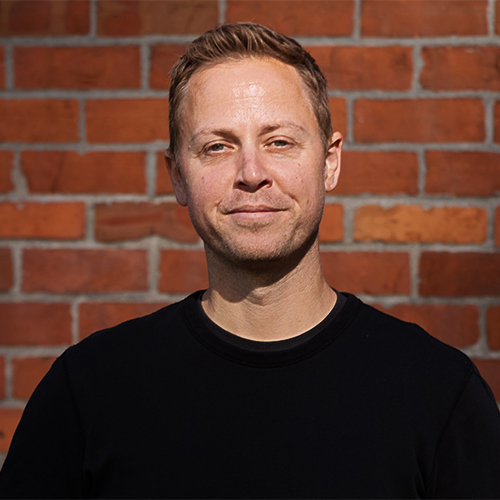
Adam Scalena
Adam is a full-service realtor, specializing in Vancouver’s best areas. His systematic approach to real estate and dedication to his clients has consistently placed him within the top 10% of realtors operating within Greater Vancouver.
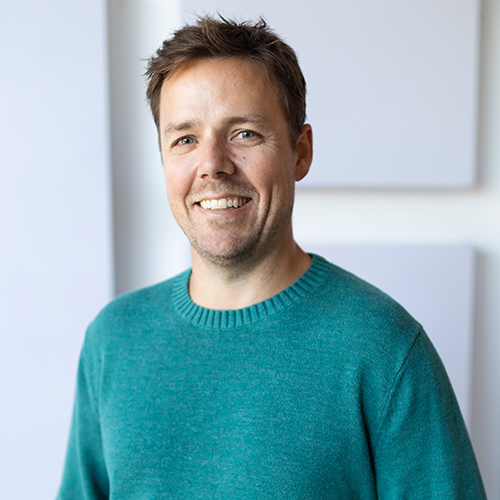
Matt Scalena
Matt is real estate obsessed and considers himself a lifelong student of the Vancouver real estate market. As a co-manager of the Scalena Real Estate team, Matt prides himself on expertly advising buyers and sellers on all aspects of the fast-paced, dynamic Vancouver real estate market. He is present at every stage of the process, from that first phone call or email right through to when keys are exchanged between sellers and buyers.
Sponsors




Full Podcast Transcript – Interview with Brad West
Adam Scalena: We’re here with Brad West. He is the mayor of Port Coquitlam. How you doing, Brad?
Brad West: I’m great. Thank you very much for having me. I really appreciate the opportunity.
Adam Scalena: Yeah, well thank you so much for taking the time today. Can you maybe start by telling our listeners a little bit about yourself?
Brad West: Sure, well I’m a lifelong resident of Port Coquitlam. Just absolutely love this community. My parents moved to Poco in the early 80s. They both grew up in North Burnaby. My mom always tells the story that my grandma cried for a week when she told them that they were moving to Poco because she thought she would never see her daughter again. Poco’s come a long way since then. Just pretty typical middle class upbringing here in the city. Big hockey player. That was my passion. That’s what I wanted to do. And then eventually found my way into civic governance and I kind of just fell into it in a way.
I was involved in the community, not in politics in any way. My family weren’t political, but I played hockey, we were involved in a lot of sports. My parents believed in being involved in the community and volunteering and giving back in different ways. In 2008, I actually ran for city council. I was 23 at the time and I’m not sure whatever possessed me to run for city council at that time. But I think I had some encouragement from friends and I do remember thinking at that time that there should be someone younger on city council. In those days, Poco City Council kind of resembled a bit of a retirement home. So there wasn’t a lot of young people on council, even though council is making some pretty important decisions about the future of the community and Poco’s a young community, a lot of young families here. So anyways, I ran an election. I got elected to city council and then fast forward to 2018. I ran for mayor and have been very privileged to be the mayor of this city since then.
Matt Scalena: So Mayor West, and I guess that’s what we call you, right? Mayor West?
Brad West: Well, you can call me Brad. Mayor West invites a lot of family guy jokes.
Matt Scalena: Okay, right on. Well, maybe starting off, is Metro Vancouver in a housing crisis in your mind?
Brad West: Well, there’s certainly thousands of units of housing that are for sale. Now, maybe there’s a question about whether they’re the right type of units that people are looking for, the price point, people’s ability to afford them. But in terms of just having a supply of housing units, the math would probably tell you no, because last I checked, there are in fact thousands and thousands of units that are sitting empty. And so it’s obviously a very complex issue with a lot of moving parts. I think it’s important to acknowledge that we didn’t get to the place we are overnight. There’s been a number of intersecting issues and challenges that have brought us here.
I have my own particular view. I think one of the things that really challenged us as a society, as a province, as a country was a period of supercharged population growth that basically broke every historic norm. There was a period of time when Canada’s population growth was about three times its historic norm. There’s not a G7 country that even came close to the level of population growth that we were seeing. And the nature of that growth obviously was the vast majority of it was through immigration and primarily through temporary residents in various streams. So I certainly think that there were a number of mistakes that have been made with respect to that and decoupling the decisions around population growth from everything else that you need to support it, including housing, infrastructure capacity, social services, healthcare education, et cetera. So I think that certainly had a compounding effect and is one of a number of things that have led us to a challenging situation.
I also think that in large part, we have seen over the last several decades, the transformation of our economy from one that was traditionally based on our resources into one that was much more focused on real estate and that real estate was going to be not only an important part of meeting people’s needs in terms of housing, but real estate was going to be the primary economic driver of the country and the province. And there are certainly pitfalls in that as I think we’re experiencing now. So a lot to unpack there and a lot of decisions probably well intentioned over a long period of time.
Adam Scalena: Why do you think we have, I mean, the resource-rich suggestion, why have we avoided not creating an economy more aggressively around these resources, in your mind?
Brad West: I think for a variety of reasons, first and foremost, there has been, albeit a very small group of people in society, they have been very vocal, who have an ideological opposition to developing our resources. And I think that they approach it not from a place of genuine concern about ensuring things are done properly, but from a place of this should be left in the ground. And I think government has created processes that allow those individuals to hijack and to drag things out for so long and create so many obstacles that many companies simply will not subject themselves to that. So we’ve allowed these processes that are supposed to be about getting public input, about ensuring things are done properly, about protecting the environment, making sure people are treated fairly. In my view, we’ve allowed those to be hijacked, weaponized by people who I don’t think you’ll ever satisfy. There’s not a level of reasonableness to their position.
You could have the best project with the highest environmental standards paying people really good family supporting union wages and it still won’t be good enough. They’ll still oppose that mine, that mill, any number of industrial activities. Now I feel that the pendulum is swinging back though. I think that even levels of government are now understanding that they way over swung on that. But it’s gonna take some doing to reverse all of what we have built up because I think we’ve really painted ourselves in a corner and I just can’t get my head wrapped around why a country in the province that is as blessed as we are with natural resources that people around the world would kill to have. And we have to our own detriment got ourselves to a place where they’ve become impossible to develop and to accordingly create broad-based prosperity for our people. So it’s really frustrating to see.
And I think it’s important in the discussion to always go back to the real people who are impacted by these decisions. In my previous career, prior to my time as mayor, I got to do work that brought me into a number of communities across this province and talk to people who make their living by going into a mine, who make their living by going into a sawmill. And to talk to people who, after years and years of commitment and work, find themselves out of work is just devastating to them, to their family, to those communities. And in forestry in particular, it’s unfathomable to me that a province like British Columbia that has historically been synonymous with forestry, you’re now just seeing the industry a shadow of its former self. The mills that still exist are hanging on by just their fingertips. This is not some natural occurring phenomenon. This is not the way it is just going to be. To me, this is because of a lot of bad government decisions and regulations that have basically put the industry in a chokehold.
Matt Scalena: Brad, just thinking about a couple things you’ve said here, you said the pendulum swinging back. It strikes me that immigration, where we’ve kind of had this whipsaw effect, the economy, the real estate being whatever portion of BC’s economy, that seems to be in question now. I was struck by your answer around the housing crisis because we spent kind of a decade plus talking about the need for more housing. And your answer actually focused on the fact that we have tons of units available, right? So are we in kind of a historic moment of change, of shifting in our kind of provincial, the stories we tell about ourselves and our path forward? Is this kind of that moment or am I overstating it?
Brad West: No, I don’t think you are. It feels like that. You think about these great moments in history and wonder what it must have felt like for people when there was really dramatic change happening. And it probably felt pretty normal. Day-to-day life just kind of keeps you occupied, and if you don’t take a moment and step back and kind of examine the bigger picture, I think it’s really easy to lose sense that you’re going through a moment of profound change. And it does feel like that when you do step back and you look at what is happening to our country, our province, on all the fronts that you’ve just described, it does feel like we are going through a real upending of, as you said, some of the things that we tell ourselves. And so that instability, it certainly creates so many challenges. I think people are longing for a sense of stableness, of security, economic security in particular.
But I would say that, as in everything, there’s both risk but opportunity as well. And maybe we have an opportunity to undo some of the mistakes of the past, to have learned from some of the mistakes and to also go back to some of the basic tenets. I think there’s a strong tendency, I think just generally in government, but probably in everything to overcomplicate things. And I think sometimes in doing so it’s because those who like to be decision makers who like to have power and control over decisions and events want to make it seem like things are so complicated that normal regular people couldn’t possibly comprehend or be involved in deciding what’s going to happen. This is the domain of those who are credentialed and deep thinkers and some people would describe them as the elites or whatever. But there’s this kind of movement or this notion that, this is all so complicated that the regular people aren’t going to be able to figure it out, leave it to us.
It goes without saying that I have a real problem with that. I profoundly disagree with it. But really, I think things are actually more simple. And I think if we got back to some of the basics, some of those central tenets, we would be better for it. And that is kind of the governing philosophy that I have tried to bring to the city of Port Coquitlam in my time as mayor as well, at least as it’s expressed running a municipal government.
Matt Scalena: And just to be clear, the central tenets that you’re talking about, can you give us some examples of back to basics? What are those basics?
Brad West: Yeah, well, I think when it comes to the economy, economic development in the province, number one, it’s build upon your strengths. And as we’ve been discussing, one of our strengths in this province is our resource sector. So build upon your strengths first. The diversification, I think, is important. In terms of appropriate fiscal management, it has a lot to do with not using the credit card to buy every single thing and thinking that you can outrun that.
These are basic principles that people apply to their own personal lives, but government basically largely neglects or thinks that they’re exempt from it. But as the province is finding out, you can only outrun this for so long. And now faced with a historic deficit, historic debt levels, our debt payments are becoming the single largest line item in the government’s budget. We’re learning some of these fundamental truths again. So I think that and then in terms of government service delivery, I think it’s about getting the basics right. Government should be focused like a laser beam on the core services that people depend on government for and not get into everything under the sun, everything that’s superfluous, everything that is less about making a material difference to people’s lives and more about virtue signaling about who we are trying to say that we are. I’m obviously in the municipal context, I’ve been very involved in that, but I think the same principle applies provincially as well.
Adam Scalena: In thinking about real estate, Brad, home prices this year were down in terms of prices, but we’re also down in terms of sales volume in Metro Vancouver at the lowest it’s been in the past 25 years. Do you see this as a good thing for the province?
Brad West: Well, I think I don’t look at it in terms of like, is this a good thing or is this a bad thing? I look at it as this was probably an inevitable thing. Again, I think talking about basics, there were some individuals, including in government, who I think bought into this idea that real estate in this province could defy every law that’s ever been established or created or experienced with anything.
And I certainly regret that a number of people will have found themselves in a very difficult situation where they have purchased something at a price point that no longer exists. And I don’t look at that as something to be excited or giddy about. But I think that this was an inevitable period of having things come back down to Earth a bit. Now, as we know over the history of British Columbia, we’ve gone through these cycles of real estate coming down, going up. I mean, again, this is not particularly new. The only thing that would be new is for individuals who thought that there was never an end to the rapid increases in value that we were seeing over the last decade.
It’s interesting when we talk about affordability and so much emphasis obviously is placed on housing. I think there needs to be a greater appreciation of the whole picture of what affordability means. And I will tie back into what we’re talking about the economy. One of our challenges was not only obviously a very significant increase in real estate values and then kind of a detachment from local economic conditions, it’s also that local economic conditions weren’t in any real way improving. We’ve had pretty stagnant income and wage growth in this province for quite some time. Now, again, I ascribe a lot of that to the transformation of our economy that was one primarily based on resources, manufacturing, value added, to an economy that is pretty focused on the service sector. That is where you’ve, interestingly, seen growth in really two sectors. One is the public sector. So people working for government has grown very significantly. But in the private sector, really the most significant growth has been in the service sector, which just the reality is not paying the same type of wages or incomes that you see in a more resource-based industry, in the value-added industries, in the manufacturing, tech, et cetera. So I kind of always say it this way. You can’t build an economy on whale watching and coffee shops.
And unfortunately, I’m painting a bit of a broad brush, but it’s not far off the mark that that’s kind of where the economy went. In terms of then affordability, when you see your economy transform that way and that become a more dominant source of employment with the corresponding stagnant income and wage growth, then your challenges on affordability are only compounding. So I think that there’s a lot there that needs to be viewed much more holistically than simply the idea of single-mindedly focused on trying to bring down the price of housing. There’s a lot that I think needs to be done about creating an economy where people are becoming more prosperous where we are seeing more broad-based prosperity and people are seeing wage and income grow not at the very anemic levels that we’ve seen over the last number of years.
Matt Scalena: So, Brad, I’m just thinking about that. Really, most people would say since Expo is when Vancouver made its mark on the global stage, there’s been a lot of energy put into Vancouver, Metro Vancouver as a brand. And we’ve recently talked about kind of the decline of that brand in recent years. I guess I’m wondering, have you kind of looked back over the last 10 to 20 years? Like, is it just that there’s a lot of energy been put in that? Is it actual policy that has led to this burgeoning service sector as opposed to the value add jobs you talk about in the industrial sector. I guess why I asked that is, is it just a policy change that needs to happen where we can shift back to a more robust economy with higher paying jobs and kind of set a different course?
Brad West: Yeah, well, I think it’s not only that there was a lot of emphasis placed on that and a lot of resources and energy put into it. And don’t get me wrong, I’m not discounting that there’s a certain degree of value that has been created around Vancouver as a brand, as internationally recognized. I think some people can get a little drunk on that, drinking from that cup. Maybe a bit too much is made about it. I don’t completely discount it, but certainly not all your eggs should be in that basket. The challenge probably isn’t just around the branding, the emphasis, the energy and sucking up all the oxygen in the room. It’s also that there has been government policy decisions that have kind of doubled down on that and have had an impact in the rest of the region in the province. I think a couple of examples that come to mind is the, the word crisis gets thrown a lot these days. We have a crisis of industrial land shortage in the province, but particularly in Metro Vancouver.
You saw so much conversion of industrial land into residential uses, into condos, and so many cities allowed that to happen and they went in, they chased that money. And there’s probably instances where maybe that worked out okay, but I can tell you that one of the results of this is that our industrial land is at a record low in terms of availability in the region. And so what happens when you don’t have industrial land? Well, it means that industrial activity has to go elsewhere. It really puts a constraint on businesses that are trying to find places to locate. And so many of them are ending up either in Alberta or Washington State or other places because there was just simply no land available to meet the needs of industrial businesses. Not only that, but it has also driven up the valuation of industrial land to the point where sometimes that forces businesses out as well.
In Port Coquitlam we don’t have an unblemished record but we have done a better job than most at resisting that temptation. I think one of the examples I look at is, The Poodle has built a half billion dollar processing plant in Port Coquitlam in the last couple of years. That is employing upwards of 400 plus people in paying them unionized wages and benefits, family supporting jobs. And they ended up in Port Coquitlam because the industrial property they were on in Burnaby became had such a high valuation as condos that the temptation was too much to resist. So they end up leaving Burnaby. And if you go to where they were located now, now it’s high-rise condos. And they found a home in Port Coquitlam, which I’m really pleased about. And it’s a very large operation, so they needed a large space.
That is one example that has played itself out in this region over and over and over and over again. And in every instance, I’m sure that the decision makers could rationalize making that decision that time. The cumulative impact of this is that we have lost so much industrial land to conversion. And with it, we have lost the economic that those businesses bring. We have lost the investment. We have lost the employment. And I think it hollows out communities. If you’re gonna be a complete community, you have to have places for people to go to work or else what happens? Well, what happens is what we’re talking about. People working coffee shops. So that’s one example of the policy following through on the branding kind of premise. And there’s other examples as well. I think, again, I’m not arguing that there isn’t a place for a more balanced approach. But I think the key there is balance. There was so much over swinging on all of this. And now we’ve got ourselves, I think, in a pretty precarious position.
Adam Scalena: Well, in the same light of thinking about over swinging, the province did some blanket rezoning across the municipalities in BC. What are your thoughts on this as a policy and should we be so focused? Like should the province be involved in and how focused should we be on creating density?
Matt Scalena: And sorry, but just can I just add, do we even need that housing? Because part of my takeaway so far in this conversation is like, do we actually need that blanket rezoning?
Brad West: Yeah, so I think the province’s housing legislation has been very poorly thought out and probably even more poorly executed. I think the first thing is if you’re preparing to make a very radical departure from a current practice, whatever it is, I would suggest that it behooves you to actually speak to those who are going to be impacted by that change. Mistake number one, the province didn’t talk to a damn person. There was no consultation with local government. They didn’t talk to a mayor, a city councillor, a city planner.
And yet they were preparing in secret to upend decades and decades of community planning. So I just think right from the very beginning, the approach was wrong. And the execution, I think, has been, as I said, even more poor in that this one size fits all decision making from Victoria completely neglects some of the most basic characteristics of individual municipalities.
I have a Port Coquitlam example, but perhaps even more egregious is an example from the city of Pitt Meadows, our neighbour. And their mayor, Mayor Nicole McDonald, has spoken about this. Okay, Pitt Meadows is 80-ish percent agricultural land in the ALR. It has an airport. It also is bound by the Pitt River and the Fraser River. So it has a very limited land base for residential housing. The airport restricts their ability to go up. The ALR restricts their ability to do just about anything. The rivers restrict their ability to go east and west, north, south.
And despite that, the province places them under a housing order that isn’t even in the realm of achievable. Just simply will not happen. The same is true in Port Coquitlam. We have a limited land base. We’re surrounded by three rivers. We have one of the largest rail yards in Western Canada running right through the middle of our community.
And if I were to follow the province’s housing order that they’ve placed on Port Coquitlam to the letter, we would see a historic number of housing units built. And the vast, vast, vast majority of those would be one bedroom condos. So this to me is what happens when you have decision making transferred from a democratically elected local city council to a bureaucrat in Victoria who probably can’t find most of these communities on a map and certainly has no appreciation for the very real challenges that exist with where housing is going to be developed. Not based on some perceived nimbyism of people not wanting housing, but of real obstacles to growth and development that have to be carefully considered.
That’s not even touching upon the infrastructure piece of it, where up until this point, you had a city like Port Coquitlam concentrating growth in an area where infrastructure can support it, where utility upgrades are planned, where there’s all the different elements that are needed to support housing and make it successful. And taking all of that and tossing it out the window and saying, no, we’re just kind of vomiting, and I use that word purposefully, kind of vomiting this density all over the place. And so I think it’s been, I don’t think it’s worked. I don’t think it’s been successful. The government isn’t listening. I think that this is more of them playing politics in that housing affordability has always been at the top three things that people are concerned about.
And in the absence of any sort of real plan that ties in economic growth and development, they decide the next best thing to do to give the appearance of doing something is to pick a fight with municipalities. And to say, the reason all this is happening is because the mayor and council in Oak Bay and West Vancouver didn’t approve some housing project a decade ago. I mean, these are the examples that they give of justification for why they’ve done all this. We had, they turned down some condo in Oak Bay as if the province’s housing challenges are going to be solved in Oak Bay. So it’s just, I think the whole thing has been completely misguided. I don’t think it’s had any positive impact. And in fact, in my city, it’s made things a hell of a lot worse because we used to see in Port Coquitlam, our bread and butter form of housing was townhomes. And I think it’s a fantastic form of housing, ground orientated, planned, parks, green space, amenities, thoughtfully done parking, things that are actually required in reality to be able to have a functioning community and neighborhood.
And they basically, the province’s changes have killed townhouse development in Port Coquitlam. We have not seen a single application for townhomes since they brought in their small-scale multi-unit housing legislation. And before, we saw tons of it. And they’ve killed that form of housing, and it’s been a huge detriment to our community and I’m sure many others.
Matt Scalena: How frustrating, and maybe this is a question you don’t want to answer, you’ve been in municipal politics for almost 20 years, I guess, 18 years, and the mayor since 2018. But how frustrating is the dealing with the province today? Because you’ve been around long enough now where you’ve seen John Horgan, you’ve seen the Liberals before that. Is right now uniquely challenging or is it just like, it’s always challenging and you’re always shaking your head?
Brad West: I mean, to a certain degree, it’s always challenging. And some of this is probably just baked into the cake. It’s probably bit of a time-honored tradition that municipal politicians complain about the province and vice versa, by the way. So I get just the nature of the beast is that there’s always some push and pull and it can be a bit of a grind. But I do think that right now it is uniquely challenging with this government. I don’t get the sense that they’re listening at all. I mean, they may hear you, but I see no inclination to course correct, to make any adjustments, to acknowledge any errors or mistakes. It’s just kind of a blanket like, nope, this is what we’re doing, this is working. And that’s what it’s been like on this provincial housing legislation. It’s not like there hasn’t been a litany of letters, meetings, phone calls, pleading, begging, demanding, to try and get some adjustment, and there’s been none.
And again, that suggests to me that this is more informed by politics than by actually wanting to see a particular outcome. Because I think if you want to see an outcome, you would adjust. I think there’s nothing wrong with politicians admitting that they got something wrong. We do this in life and business. You don’t get it right. You adjust.
It’s related in some ways to a marriage. You certainly wouldn’t stay married very long if you conducted yourself in this manner of, you’re always right. There’s zero compromise. It’s your way or the highway. That’s not the way life works. And so why some people think that that’s the way government should work is beyond me. So it has been, it has been frustrating. And then the other I think piece of it that’s frustrating is the consequence of all of these decisions is also a financial consequence. Like there are cost implications to the municipality and therefore to taxpayers. And the province doesn’t have any money. So they’ve gone off and they have knocked over the first domino of a bunch of dominoes that are now creating significant cost pressure on the municipality and then when you go to them and say okay well look now we need to upgrade this or we have to upgrade that to accommodate for what you have decreed must happen so where’s your contribution to that upgrade?
They’ve got no money. So that’s the other part that makes it frustrating is like, at least if they could have some skin in the game financially, then it’s like, okay, you caused this, but at least you’re trying to help with the consequence of it. But there’s none of that either. So now I’m wrestling with massive utility upgrades that were unplanned and are very expensive. And the municipality being kind of told, well, you’re on your own or you can go and compete against every other city in the province for a small little piece of money that’s in a grant program. So very challenging.
Adam Scalena: Just maybe changing gears here a little bit, Brad, but the Cowichan decision has been a hot button issue and it seems that nowhere in BC is really exempt from a claim, including I think Port Coquitlam, which has recently, I believe there’s a claim at the municipal level. What does this mean for the province and how do you think we should be navigating this as a region and as a country, I guess?
Brad West: Well, it means a great deal of uncertainty at a time where we can ill afford it. That is one of the most immediate impacts at a time, again, where the province is in a very precarious financial position, needs every investment dollar it can muster to be able to create viability and sustainability in our economy here, particularly as we continue to be pressured economically from the United States. So you have this really challenging environment with respect to that. And then you get a court decision that says, well, fee simple title is in question. I mean, you couldn’t think of a worst thing to happen.
And you mentioned Port Coquitlam. We’re in somewhat similar, some differences from Richmond. In Port Coquitlam, the Coquitlam First Nation filed a land claim actually quite a while ago. And it was prior to my time as mayor. But it’s a land claim on municipally owned property where the municipality’s form of ownership is a fee simple ownership. The same way people may own their own home. The city acquired the property. It was never provided to us. The province, the crown never said, okay, here’s property for you. It was acquired by the city. And again, it’s a fee simple ownership. And it’s also a very important piece of property. It’s primarily Gates Park, which is the city’s premier athletic fields used by tens of thousands of people, soccer, field lacrosse, baseball, all of it.
And so the city has been very vigorously defending its ownership of this property. It’s kind of been this thing where there’s a lot of activity and then there’s none and there’s a lot of activity and then there’s none and it’s been kind of just going along that vein for many years. The province is also involved in the land claim in our area because it’s a multi-party land claim that also touches on provincially owned land as well as land owned by the Metro Vancouver Regional District. So the province is kind of the lead here and they’re leading a process that they hope will result in a negotiated settlement.
But you get this decision in Cowichan thrown in the midst of this. And what has come to light is that there are many, many of these occurring all over the province. I think one of my primary challenges is that the province, I don’t believe, has been very upfront or transparent about what it’s doing and where it’s trying to take us. You hear the word reconciliation, but it’s never defined. We don’t know what that means. What does it look like? And I think most people, most reasonable people think that we do need to do better in terms of inclusion of Indigenous people in the economic activity of the province, in terms of treating people with fairness and respect and dignity and addressing some of the very horrific things that have happened in the past. But when you have what’s kind of developed, which is everything’s behind closed doors. It’s not defined. You don’t know what it means. The province doesn’t tell you what’s on the table, what it’s considering, you start to sow the seeds of doubt amongst people about what’s actually happening here. And then you get a decision like the Cowichan decision that says, well, maybe it means that simple property is in doubt. And a lot of people are like, hold on a minute. Like that’s new information. And then you’ve had a number of other decisions also that the courts have been making on where you are having a complete upending of structures and processes that are intended to facilitate economic activity in this province. And if we can’t get this sorted, I think we’re in trouble because you are not, you’re just simply not going to get any sort of investment in a place that has such a high degree of uncertainty, instability, and everything being in flux.
So I think the government’s got to get a handle on this and quickly. And I think that the first step is forget just BSing people with feel good statements. Let’s be really clear about what our goals are, what we’re trying to get to, what the implications are of it, what it means, what it looks like, what it’s going to cost, what it’s going to change. This is serious stuff with serious implications. The province passed the legislation that is now coming back to bite them in 14 minutes. So how does 14 minutes of debate ever allow you to do your proper due diligence in understanding what this all means?
Matt Scalena: Is the land claims and reconciliation, is that the single biggest challenge we face right now in your mind Brad? I mean, I feel like, and I’m just looking at the clock here and I know, we’d love to keep you all day, although I know that’s not possible, but we’re talking about, we haven’t talked about drug policy. We’ve hardly talked about immigration. We haven’t talked about development levy charges and how if no new residential construction’s being built, there’s almost 40% of those fees that municipalities and governments don’t have to do the upgrades that you’ve talked about. But it strikes me as kind of going back to the bedrock foundations of British Columbia and Canada that the Cowichan decision and what it means is potentially the biggest challenge we face right now, but what are your thoughts?
Brad West: Yeah, without question in my view, right now. That’s not to say there aren’t other challenges that will emerge or will come up to the top of the list. But I think right now at this moment in time, that is the number one challenge that we have as a province. Because the implications are so far reaching. And because it’s impacting just about every sector of the economy. There was a court decision around mining under the auspices of DRIPA. And my understanding is there are so many different challenges that are under the auspices of DRIPA, but that is basis of the challenge at various different stages. So you’re gonna see these things pop up over and over and over again as they get in front of the courts on different matters.
So I suspect that is why the premier has said that they are going to be making amendments to DRIPA, which is a pretty significant admission. It certainly hasn’t escaped my attention that the premier and the province are not keen to say that, well, maybe we need to change something as we talked about earlier. So someone said to me, when they’re saying, okay, we’re going to make some amendments, you know it’s bad.
Adam Scalena: Well, Brad, we’re at the end of the hour here and I know you gotta go. We do have this quick segment, the five wire, five lighthearted questions. Can you stick around for that?
Brad West: Sure, let’s do it. Hopefully I won’t regret it after the questions. No, I’m good.
Adam Scalena: All right, so question number one. One book that you’ve read recently that you’d recommend for our listeners.
Brad West: I’m rereading and I think I probably read it in grade, geez, was it grade like 8, grade 7, 8? I’m rereading Animal Farm by George Orwell. And yeah, it’s a good read. I’ve only started it, so I’m just a couple chapters in. But I like Orwell’s writing and whether it be Animal Farm or 1984, which I’m gonna read after, it’s amazing again how much of history repeats itself and to go and reread a book like that and to be able to draw parallels to certain things that are happening today. So that’s my current read.
Matt Scalena: It’s amazing that I think I was probably the same age when I read that and I remember thinking, wow, what a crazy time when this stuff actually mattered, right? Like this is so far in the past. It’s kind of a little scary that it’s so relevant today. Brad, in the last few years, what new belief, behavior or habit has most improved your life?
Brad West: Not spending so much time on social media. When I was first elected, I wanted to make sure that I was a mayor that was very accessible to people, that’s still important to me. We’ve talked a lot about balance and over swinging. I think I probably was over swinging on that. I would get tagged in all sorts of different things. And I would try and address the concern, answer the question. But I didn’t have proper boundaries put up. And then that would, I take that home with me. And then I would catch myself, rather than doing what I should be doing, which is being a really involved husband and dad. It’s like the draw of the phone was too much. So I’ve been really disciplined, not perfect, but much more disciplined about like when I get home, putting some distance between me and the phone and making sure I’ve got my attention on my two boys and my wife. So, and I’ve felt that I’m not any less of a good mayor. I’m not any less responsive, but I’m way more, it’s more respectful of my family. And I think it’s just been better in terms of stress and managing what is a very demanding role. So that’s probably where I would go with that one.
Adam Scalena: That’s a great one. What have you been binge watching or a movie recommendation?
Brad West: Well, we just finished, my wife and I just finished Landman season two, which I’ve liked it. I didn’t like it as much as season one but Billy Bob Thornton is really good in it. He does a really good job and it kind of hooks in. It’s been good. I know it’s been renewed for a third season. We’ll probably keep watching it. But that’s been the latest binge.
Matt Scalena: What are you listening to lately Brad? Favorite band? Music?
Brad West: I’m a huge Chris Stapleton fan.
Matt Scalena: Yeah. Did you get tickets to the, are you going to that concert?
Brad West: My wife got tickets, seemed to be one of the few people who managed to do that. Yeah, she had like, it was like she was running a military operation. It was like multiple computers and the phone and like in the fan club and like just right away like bam. But yeah, I know that those went quick. Yeah, we’ve seen him once before live and it is the best concert I’ve ever been to and I’m a huge fan and I’m really excited about that one. I should say that I listen to him when I can wrestle control of the music away from my oldest son who just turned nine and is rediscovering, well, he’s discovering music that I used to listen to. So it’s kind of, it’s kind of funny, right? Him and, cause he plays hockey and he plays lacrosse. So him and all his buddies, they discover these, for them, new songs that for me are old songs. So he usually has, he’s usually dictating what we’re listening to, but yeah, it’s all good.
Adam Scalena: And last but not least, something you’ve purchased for under $1,500 that’s had a positive impact on your life.
Brad West: Probably my hockey skates. As I mentioned, grew up playing hockey and then pretty competitive throughout. And then when the dreams of the NHL were dashed and back to reality, I started, I didn’t play, I played a little bit of league, but then didn’t really play. And then when I was elected mayor, really couldn’t play just because of demands and how busy it is. But in the last couple years, I’m like, I want to get back out. It’s something I just love, right? And my son’s playing now. And so I’m helping coach his team. So new skates, new stick. And I just love being out there. It’s probably, no matter what else I’ve got going on that day, it’s probably always the best part of my day when I get to be out there on the ice with him and the other Poco Pirate U9 hockey players. So yeah, I’m really, really enjoying it.
Matt Scalena: Right on. Well, hey, thank you so much for your time again, Brad. That was great. And I know you got a busy life, but hopefully, who knows, maybe you’ll run for higher office at some point.
Brad West: You never know. I said like, right now both kids, both boys, they really like me and they like spending time with me and I know that won’t last forever. So maybe when they’re older, you never know.
Matt Scalena: I was going to say I have a daughter who’s 14 and I have all the time in the world all of a sudden. So you got five years. Right on. Okay. Well, yeah, I guess. Thanks for your time again.
Brad West: Thanks guys, I really appreciate it. I really enjoyed it.
Adam Scalena: Okay, excellent. Well yeah, enjoy the rest of your day Brad and thanks again. Talk to you soon.
Brad West: Yeah, you too. All the best.


