Table of Contents
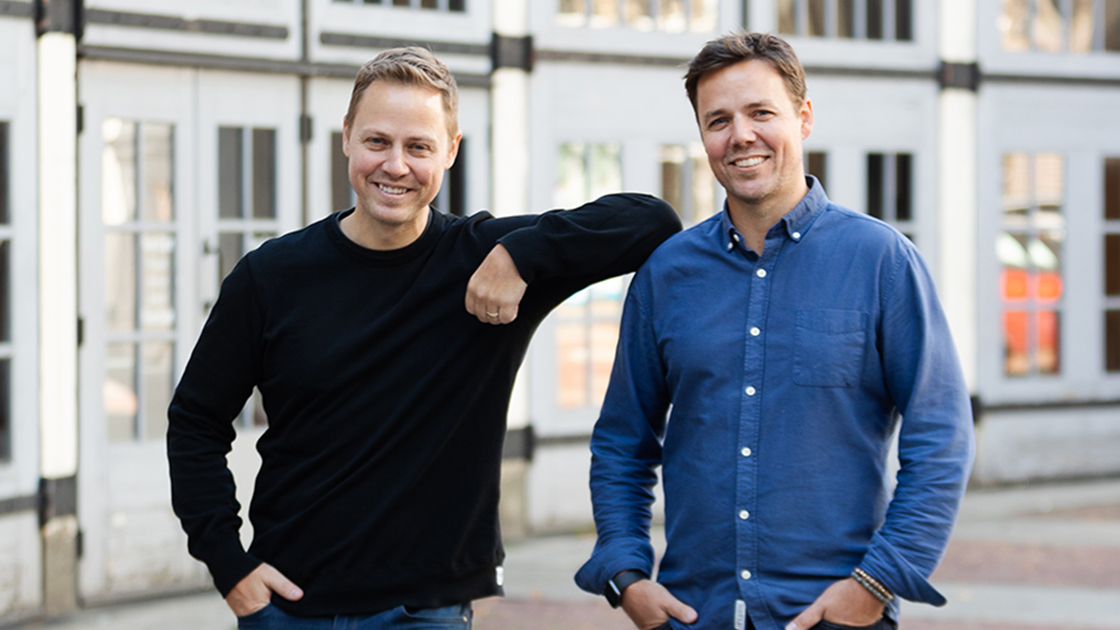
Listen On: Apple Podcasts | Spotify | Google Podcasts
Guest Information

Jonathan Friesen
Jonathan was raised in a small Japanese coastal town along the Sea of Japan during the rapid economic growth of the 1960s. He attended boarding school in Tokyo in the 70s and University in Los Angeles in the 80s. Together with his family, he settled in Vancouver and began a career in property development. Jonathan has also held advisory roles with developments in Japan and the south seas.
Jonathan is a co-founder of Mission Group Enterprises Ltd. where he currently serves as Chief Executive Officer. With a diverse perspective gained by his global experience, he has learned that success is a process which is best navigated not by fitting in, but by being different.
Jonathan currently serves on several boards and holds an ICD.D designation. In his free time, Jonathan enjoys spending time with his family, cycling and traveling.
Episode Summary
Mission Group CEO Jon Friesen joins us to discuss the Kelowna market, a market he’s been working in for over 20 years. How have the recent wildfires affected the Central and South Okanagan real estate markets? Who is buying in Kelowna? And where is the Kelowna market going in 2024?
Who is Jon Friesen?
I’m half Japanese and was born and raised in Japan. My dad was raised on a farm in Saskatchewan but moved to Japan as a missionary, which is where he met my mother. They married and had three kids.
I went to Japanese school on the west coast of the country, went to high school in Tokyo and then university in Los Angeles. I got my first job in Vancouver with Mitsubishi where I learned about scale and management.
Throughout my childhood, we’d spend a year in Saskatchewan after five years in Japan. There were stark differences between Canada and Japan but kids are resilient, so we didn’t think we were doing anything strange.
I considered working in Japan and did have an opportunity there after graduation. But I thought there would be more opportunities for growth in Canada.
How did you get into real estate?
I’ve always had this desire to fail or succeed on my own terms. The entrepreneurial part of me came out while I worked at Mitsubishi.
A university professor once told me, “If you don’t have the opportunity to become the CEO, quit.” It’s not that you will become the CEO, but you want to at least have the opportunity. At the time, I didn’t feel I had that opportunity at Mitsubishi.
I formed an import export trade consulting company when I left Mitsubishi and one of my first clients wanted to work with Japanese companies to develop real estate in Canada. Once that engagement was over, I continued with those relationships and formed a company here with equity coming from Japan.
In those days, we were working in the South Pacific to build these huge integrated resorts. Our appetite may have been bigger than our capacity. The project that still remains in Vancouver is 1000 Beach Avenue.
How did you end up in Kelowna?
I did a mid-career retirement and sold out of a company at 40 years old. Before that, I hadn’t been the greatest dad or husband because of all the travelling I did. I wasn’t spending enough time with my family.
So I took some drastic action and after talking it over with my wife, we moved to Grand Cayman. After living there for six years, we decided to return to Canada to give our kids a more global experience.
My wife’s parents were living in Kelowna and that gave us an insight into the community. Moving to Kelowna allowed us to come back to Canada but still live in a smaller community that was great for raising families.
The moment we moved back, I started a development company. Another reason why we moved back to Canada from Grand Cayman was because I was out of money. This was 2001/2002, so it was a very different time in Kelowna real estate.
No one believed in the potential of Kelowna back in 2001 but I could see it happening. It had one of the best qualities of life with an international airport and university incoming. In terms of a place that had great upside, Kelowna was it. And I think it has surpassed expectations.
How was the transition from retirement in Grand Cayman to starting Mission Group?
When we moved to Grand Cayman, I was burned out. Being able to recentre and focus on my core values allowed me to set up as a more stable and responsible business owner.
I was able to reboot into a business owner with a lot more confidence than when I was just starting out.
How has developing in Kelowna been over the years?
The city council and staff in Kelowna have always been helpful. It’s much easier working in Kelowna than it is in Vancouver. Kelowna is very cooperative and reasonable.
How is the Kelowna market right now?
The Kelowna market right now is weird. It has pockets of brightness and others that aren’t so bright. The recent Kelowna fires have put a damper on the market. But I remember this happening in 2003 with a worse fire; the market has a very short memory.
Our hearts go out to people in West Kelowna and other areas in the Okanagan that were affected by the wildfires. But if you drove through Kelowna proper, you would never know there was a fire.
Oddly enough, there’s always a rebound after these situations. We saw this effect during covid and we see it after any natural disaster. There’s a real estate pop right afterwards.
It feels like the narrative around these wildfires is that they are progressively getting worse and this is the new normal. Is that the story in Kelowna?
I’m sure I’m the wrong guy to ask about forest fires in the future. We can see climate change and global warming happening, and we should all be concerned about those effects.
In our subdivision, we were required to do forest fire mitigation, removing the smaller trees and underbrush to discourage fires. I think we need to improve on mitigation tactics like this in other areas of the Okanagan, especially around single family homes.
I think it’s unlikely West Kelowna will see another fire event like they did this summer anytime soon, if only because the fuel is all gone.
When we were evacuated during the wildfires, we stayed at my son’s condo. One of the takeaways for my wife and I was that we don’t need this monstrous home. It’s convenient and comfortable to be in a denser living space.
How has the Kelowna market been in the last 12-18 months?
We consider a balanced market to be when 18-22% of the total inventory sells and prices don’t go up or down. When the interest rates first started to peak, we saw a severe drop below 18%. Since then, it’s been in the middle between 18 and 22%. Overall, it’s a nicely balanced market in Kelowna besides the few weeks of forest fires.
In our Aqua project, we have some remaining inventory that won’t complete for a few years. We’ve been putting virtually no effort into selling those as we think the prices will go up. But if someone comes into the sales office by appointment, we’ll sell them. Those homes are regularly moving even though we’re not pushing them or offering any incentives.
The last one sold at $3.95 million – and that’s for a condo in Kelowna with virtually no marketing effort. So there are sweet spots and good demand if the product is right.
Historically Kelowna saw a lot of retiree buyers and buyers from Alberta. Who is buying in Kelowna today?
There are still retirees who are not interest rate-sensitive buying in Kelowna. But we also have business owners who are independently wealthy, not affected by the interest rate, and buying what they want to buy, when they want to buy it.
The largest demographic of people moving into Kelowna right now are working professionals with young kids. That’s where the demand is. And those folks are interest rate-sensitive.
Does Kelowna suffer from low inventory?
I think we suffer from low inventory even more than Vancouver does. Kelowna is the fastest growing community in Canada and we can’t supply enough homes to satisfy the demand.
The Kelowna market is much softer than it used to be, but everyone still wants to be here. Potential buyers are waiting for the bottom but if you wait too long, you’ll miss the bottom and be competing with everyone else.
We see it as our duty as developers to provide as many homes as we can given what our finances, the city and the community allow. That will make the housing situation much better.
Let’s talk about Alma on Abbott. Can you tell us about that project?
If you’ve been down Abbott Street in Kelowna, you know it’s a beautiful street with large trees, wide bike paths, great buildings – it has a Point Grey feel to it. Alma is on the corner of Abbott and Cedar, near a charming village and beautiful park.
Getting to build in wood frame again and bringing in the lessons we have learned from concrete building has been interesting. For example, one of the concerns with wood frame buildings is sound transfer. So we’re building a special floor to overcome that objection.
The interior finishes at Alma are high-end and fit the location. It’s perfect for folks who don’t want to live in a huge high-rise community and who want to be on a more residential street. Half of the inventory is two and three bedroom condos, which are larger than you’d find right downtown.
We’ll start construction in late fall 2023 or early spring 2024. Prices for studios start in the $300,000’s; one bedrooms in the $500,000’s; two bedrooms in the mid $600,000 range; and larger three bedroom condos and townhomes in the $1 million plus range. There are 84 units in the building.
How do you outline a strategic vision for Mission Group?
Our current plan was solidified in 2020 with Deloitte. We first establish our winning aspiration. We decide where we want to go as an organization. Then we choose the lowest hanging fruit so that our ten year goal can be achieved in steps.
Our strength is in being vertically integrated. We do everything from acquisitions and design to customer care and property management internally. We want to control all of the touchpoints and serve our customers at a higher level.
The downside to that is we can’t replicate our best work farther away. It gets harder to put a full team in position the farther out we go.
Where does Mission Group work?
The epicentre of our work is Kelowna, but we go as far north as Vernon, south as Penticton and east as Kamloops. Penticton’s council is very open to development and their housing shortage is quite profound. We’re very excited about Penticton.
The first thing we ask ourselves is, “Does this project fit into our just cause?” Our just cause is Build It Forward. We want to generate prosperity for the whole community, including those who don’t buy or rent from us. We want to enrich the whole community.
Our mentality is never to keep secrets from competitors. I regularly answer questions from competitors who are a few steps behind us in the process. For us, that’s part of the Build It Forward mentality. By helping a competitor, we help the community. And we open up more business for ourselves because we’re working in a prosperous community.
What happens in the Kelowna market in Q4 of 2023 and into 2024?
We think the rest of 2023 will be pretty stable with pockets of success. We expect interest rates to start tailing off next year. Once the Bank of Canada is convinced that inflation is really dead, they can start bringing the interest rate back down.
In the meantime, supply has been hurting. A lot of projects were put on pause, though they will come back once the market is active again. But that won’t result in immediate supply because building takes time.
Now is an opportunity for folks who have faith in where the markets are going to invest. We know that demand outweighs supply and we won’t be able to fix our supply shortage. It’s a short window of opportunity to jump in before you have to compete with everyone else.
The 5 Wire: Getting to Know the CEO of Mission Group, Jon Friesen
What is one book you recommend?
My wife and I are reading The Evening and the Morning by Ken Follett. We’ve gotten into these big historical novels based on real historical events. They’re fascinating! The protagonists are builders, which is my connection to the novels.
What new belief, behaviour or habit has most improved your life?
I’ve developed a habit of waking up early, before 5:00 am, to read one short passage from the Bible and meditate on it. It helps me centre myself and interact better with people.
What have you been binge watching lately?
I’ve been enjoying all forms of motorcycle and bicycle racing. There’s so much drama in those races!
Favourite band or type of music?
I do listen to a few Japanese bands but the musician I’m most into right now is Cory Wong. I think he’s a guitar virtuoso! He does a jazz punk style of music.
What is something you’ve purchased recently for under $1500 that has had a positive impact on your life?
A purse for my wife.
Episode Host
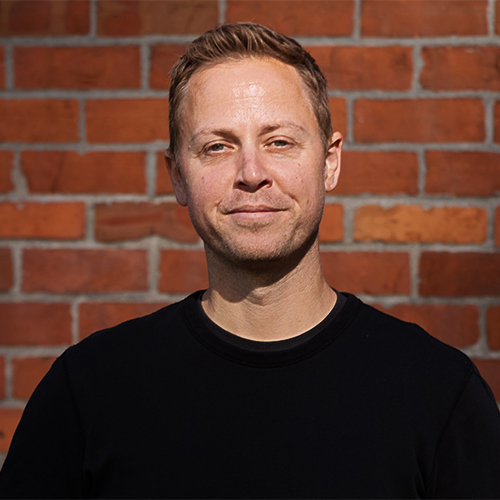
Adam Scalena
Adam is a full-service realtor, specializing in Vancouver’s best areas. His systematic approach to real estate and dedication to his clients has consistently placed him within the top 10% of realtors operating within Greater Vancouver.
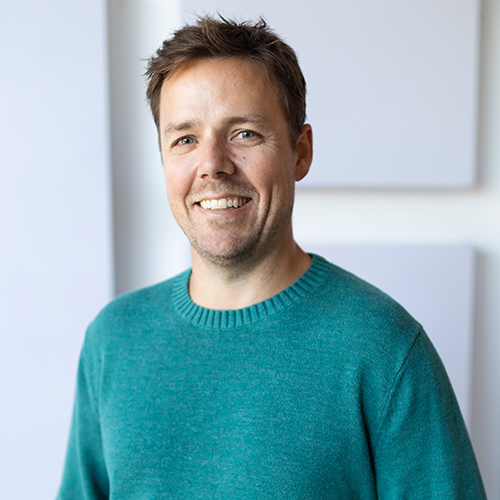
Matt Scalena
Matt is real estate obsessed and considers himself a lifelong student of the Vancouver real estate market. As a co-manager of the Scalena Real Estate team, Matt prides himself on expertly advising buyers and sellers on all aspects of the fast-paced, dynamic Vancouver real estate market. He is present at every stage of the process, from that first phone call or email right through to when keys are exchanged between sellers and buyers.
Sponsors