Table of Contents
Listen On: Apple Podcasts | Spotify | Google Podcasts
Guest Information
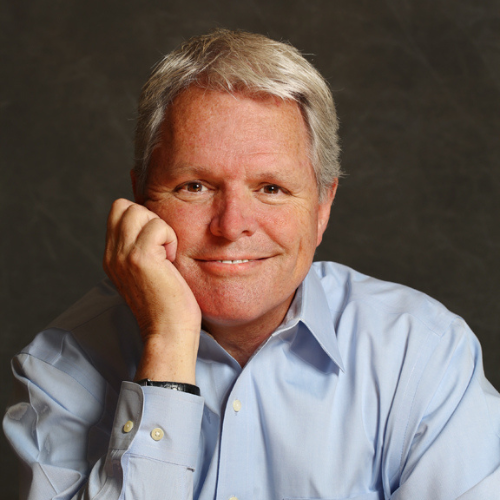
Larry Beasley
Larry Beasley, CM is an internationally-known urban planner. Formerly Co-Director of Planning for the City Of Vancouver in British Columbia, Canada, he is largely credited with the transformation of its downtown core along New Urbanism lines, known as Vancouverism or “The Vancouver Model.”
Episode Summary
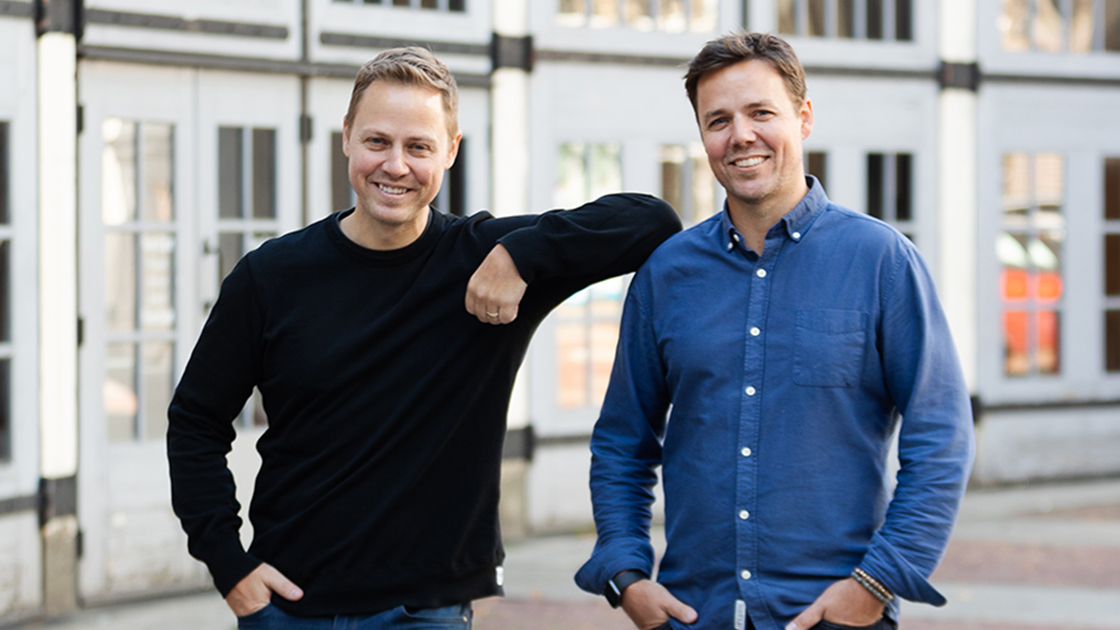
Urban Planner Larry Beasley sits down with Matt and Adam to share his take on Vancouver – how things have changed since covid and what needs to change to make Vancouver a city of tomorrow. Is Vancouver’s global stature intact? Can we build ourselves out of our affordability crisis? And how do we rethink our definitions of housing to plan Vancouver’s best future?
Who is Larry Beasley?
I was in local government in Vancouver for 32 years in the planning department. I was there during the “Vancouver-ism” years when Vancouver was formed. I then went on to form my own consultancy and founded the planning agency in Abu Dhabi. I’ve also taken projects in the US, Europe and Australia.
I taught for 27 years at UBC in the School of Planning. I’m on a number of boards across the country but am retiring from some of those now.
I have one homebase in Southern California and one in Vancouver. I go back and forth a lot. I first came to Vancouver when I was 19 and made my life there.
How have Vancouver’s city planning priorities shifted in the last five years?
Priorities have changed in many ways, partially because of covid and partially because of the key issues that have emerged. Covid changed how people work and live. No one knows where that will finally land. But many of our land use definitions are no longer right.
But the more urgent issue for Vancouver is housing affordability. We’re nowhere near finding solutions for that. We also have an issue with our street culture. There are too many people on the streets with nowhere to go and who can’t coexist with others.
The planning culture in Vancouver is moving away from the quality of life urgencies that we used to address when I was in the office. It worries me that we’re trying to balance both affordability and liveability. We became a famous city for our quality of life but also for our housing prices and street scene.
Other issues shaping cities around the world are the rise of the shared economy and reallocation of public space.
Why are these big challenges now?
The issue of affordability in cities isn’t just focused in Vancouver; I find it in every successful city in the world that I work in. One of the big global issues we’re seeing is spontaneous migration. It used to be that restrictions kept people in their part of the world but we’re not seeing that anymore. That means we have millions of people circulating and looking for housing.
Cities that are attractive, like Vancouver, have more problems than cities that aren’t. Smaller or medium cities, like Vancouver, have more problems than larger cities. Part of it is migration and part of it is lack of capacity to respond to this tidal wave of demand. There are more demands on all aspects of the housing market.
It’s a world problem and will need to be dealt with in each region. The economy of development is localized, so each city will need to find ways to enhance and support their housing development.
We also need to think about our definition of a home. How does a home need to be separated from a workplace? We can’t house every single person in a single family home with a big backyard. We need to open up living possibilities in new ways we haven’t thought about.
We tend to be gatekeepers for the old ways of living instead of innovators for new ways of living and housing people. We can’t continue to blame the development community, the local government or incoming immigrants. We need to work as partners because this is a world problem.
What is the way forward to bring people together?
We don’t actually do a lot of work together anymore. How many community organizations get together to stop things instead of working with all levels of government? If you start having conversations, you’ll find people are more open to new ideas. We have to work together instead of positioning against one another.
For example, the Broadway Plan was a really good idea with all of the right principles. But there was a groundswell of citizens who fought against it because no one talked to them. I believe the Broadway Plan should be a map toward the future which allows us to go into each community and see how we can bring it together.
Cities are complex. If you try to deal with the complexity of those decisions with superficial engagement, everyone will say no. When you sit down and talk, you find solutions. We need a new dedication to finding solutions with our citizens, rather than presenting solutions to our citizens. You have to do the hard work in the community or else we go nowhere.
Why are we moving away from quality of life as a priority in planning?
I’m not sure planners are moving away from it but sometimes civic organizations are moving away from quality of life priorities. Frustrated politicians are looking for barriers to development in city government that they can remove.
But I don’t think that’s where the problem is. Civic policy is not the barrier. The barrier is that there’s not enough capacity in the development community or in the government to accommodate the people we need to house.
It’s hard to use the old ways to provide housing for all the people coming into Vancouver. So people start doing things their own way, doing things illegally or living on the street. It’s the government’s job to be agile but also to provide a quality place. I’ve seen cities where quality is not considered and they’re awful, plus prices aren’t much cheaper.
We have one of the most efficient and effective development communities here in Vancouver. But there’s not enough developers. We’re not opening up land and providing the support that we should be. Developers build as fast as they can but how can they deliver homes for 50,000 more people every year?
Can Vancouver build its way out of this supply problem?
Housing supply is one problem. Another problem is how narrow our definition of the product is. We need thousands of housing units but we also need units that have work spaces, studio spaces, public spaces, etc.
We still believe we have to protect all industrial land in Greater Vancouver. We’re not asking about how that land could be better used or what industries we want to prioritize.
The city of tomorrow is not a city where we separate all our uses but a city where we overlay uses. That’s a very different concept than what we’re doing today.
Can you tell us more about the city of tomorrow?
I’m not saying everything needs to be stacked on top of everything else. But there is a lot more mixed use that we need to talk about. There’s more diversity of intensification we need to talk about. And there’s a lot more activity mix that we need to talk about. That leads to a different kind of city.
In this city, what you need to do each day and where you settle each night is close enough that you don’t need a car. I believe that every city needs an area that is single family housing and that is low scale housing. But we also need higher density areas.
Vancouver has one of the best regional plans that was ever put together in the world. I can’t even imagine how they did it back in the 70’s, but they did have massive public engagement. That plan is how we change the city from white picket fences to the city of tomorrow.
The cities that excite me are cities that are teeming with options. They give everyone options for where they want to put their money.
Is there a city that’s doing this well?
There are two cultures that seem to be making great strides and provide a lot of inspiration. Australian cities are much more diverse and intense than ours. They have single family areas but there’s more diversity and more mix in uses.
The second culture is in the Nordic countries. They have deliberately started thinking about different ways of living. There’s a neighbourhood in Stockholm with intense living and lush amenities where people have been housed comfortably for over 30 years. This is being replicated all over the Nordic countries.
One issue we have in Canada is we don’t get out and see what is happening in the world. We think our problems are the biggest ones in the world and our solutions are the best ones.
Does this moment remind you of any other or is this something new Vancouver is facing?
The scale of this is new to the history of Vancouver but it reminds me of the mid-70’s when Vancouver was trying to realize a new vision for itself. There had to be a reform and strong ideas of what a new Vancouver might look like.
This time it isn’t so obvious. Back then it was the freeway that galvinized everyone. But the strength of the potential of the issues of today to negate what Vancouver has achieved in the last 30 years is going to take a reform at the political level and some hard thinking.
Has Vancouver fared better than other west coast cities post-covid?
Vancouver has done a lot better than other west coast cities. Many US cities saw a complete decimation of their downtowns and still haven’t recovered. I see that a lot in my travels around California. Everyone went off to suburban living and didn’t come back.
Because Vancouver has more diverse town centres, we’ve rebounded better. We weren’t in as big of a crisis. There wasn’t a lot of commercial decline because most people lived close to where they worked already.
Has the perception of Vancouver changed in the global conversation?
In the early 2000s, any discussion about Vancouver around the world was quite positive. People admired this modern city that integrated contemporary thinking. I was often invited to cities just to tell the Vancouver story.
That has changed. There’s still admiration for Vancouver and a sense that it’s a preferred destination and important world city. But there are other stories that impact that image. The first story is that Vancouver is the most expensive city in the world – even though it’s not. The second story is that Vancouver is dangerous now, when it used to be so safe.
I want this generation to tackle the issue of affordability differently without compromising that first image of Vancouver. We need a secure middle income housing sector. We have to find the answers and fundamentally rethink what homes and workplaces are. We also need to deal with the situation on the street.
If we can make some progress on those issues, that will polish Vancouver’s image.
Can you unpack how we might rethink our definition of housing?
I hear a lot of people in Vancouver say that our housing prices wouldn’t be so high if we didn’t let in so many immigrants. I don’t believe that. I think it’s racist and not logical for a global city. If we don’t open ourselves to immigration, we won’t have the economy needed to provide jobs.
To me, a better way to deal with the demand is to find new ways of living. How can we multi-use land for housing and other purposes? I see hundreds of acres across Vancouver that are single-use and low-intensity. That’s millions of opportunities!
For example, in False Creek Flats we have an amazing area that accommodates our railways, but there are opportunities for 25,000-50,000 people to live there in quality living. And yet, we haven’t opened our consciousness to that idea.
Is how we’re trying to solve the homeless crisis in Vancouver working?
We have 21 municipalities in our region and vast lands in each one. The accommodation for homeless and low income people needs to be in every one of those places. We can’t push all the poor people into one area so we don’t have to see them. It’s not respectful or responsible. We need a regional strategy.
We need to convene a special effort at every level of government to address this. Every city in Canada has a homeless population. We need to invest more into solving this issue as a society. It will give us so many benefits in terms of money saved and taxes paid.
There’s not one answer to solve homelessness or affordability. We need to have 100 new answers.
Can you tell us about your new book?
A group of colleagues and I are writing about our work in Abu Dhabi and planning the desert. We went into a place where nothing was happening and five years later it’s a progressive framework for urban development and environmental protection.
The book has many messages that are relevant outside of Abu Dhabi. It’s about starting from nothing and transforming a city and its landscape to meet community objectives. We hope that message can inspire more creative thinking in other cities around the world.
The 5 Wire: Getting to Know Urban Planner Larry Beasley
What is one book you recommend to our listeners?
I recently read Infinity Born by Douglas Richards which is a story about humanity’s struggle with artificial intelligence. It’s really fascinating!
What is one new belief, behaviour or habit you’ve adopted in the last five years that has most improved your life?
Covid took me off the travel treadmill and made me realize there’s a better work-life balance. Another thing is the learning I’ve done into our Indigenous responsibilities and the work we need to do to help our Indigenous communities find their place on their own terms. I’ve done a lot of learning, courses and work with communities and it’s been thrilling.
What have you been binge watching lately?
I just finished The Americans and Blacklist. Both were amazing!
Favourite band or type of music?
I discovered Ed Sheeran when I was stuck in Copenhagen and I really love his work. The music is beautiful and I love that he does it all himself.
What is something you’ve purchased recently for under $1500 that has had a positive impact on your life?
It was a small painting by an English mid century painter called William Scott. It opened my consciousness to the beauty of mid century art and I now have a collection.
Episode Host
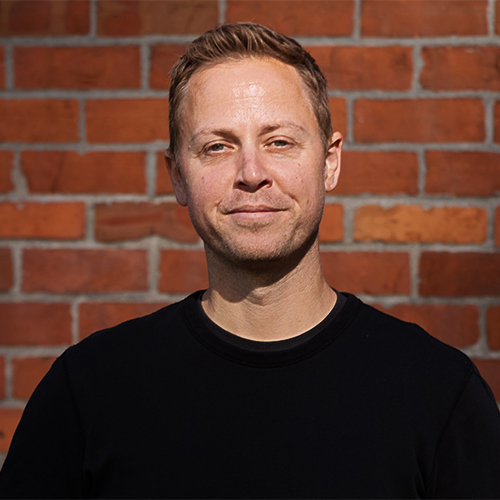
Adam Scalena
Adam is a full-service realtor, specializing in Vancouver’s best areas. His systematic approach to real estate and dedication to his clients has consistently placed him within the top 10% of realtors operating within Greater Vancouver.
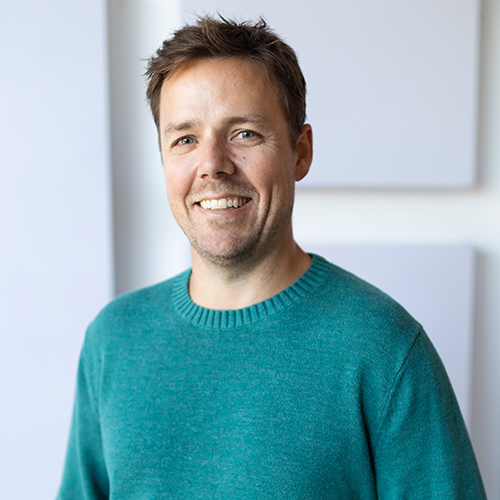
Matt Scalena
Matt is real estate obsessed and considers himself a lifelong student of the Vancouver real estate market. As a co-manager of the Scalena Real Estate team, Matt prides himself on expertly advising buyers and sellers on all aspects of the fast-paced, dynamic Vancouver real estate market. He is present at every stage of the process, from that first phone call or email right through to when keys are exchanged between sellers and buyers.
Sponsors