Table of Contents
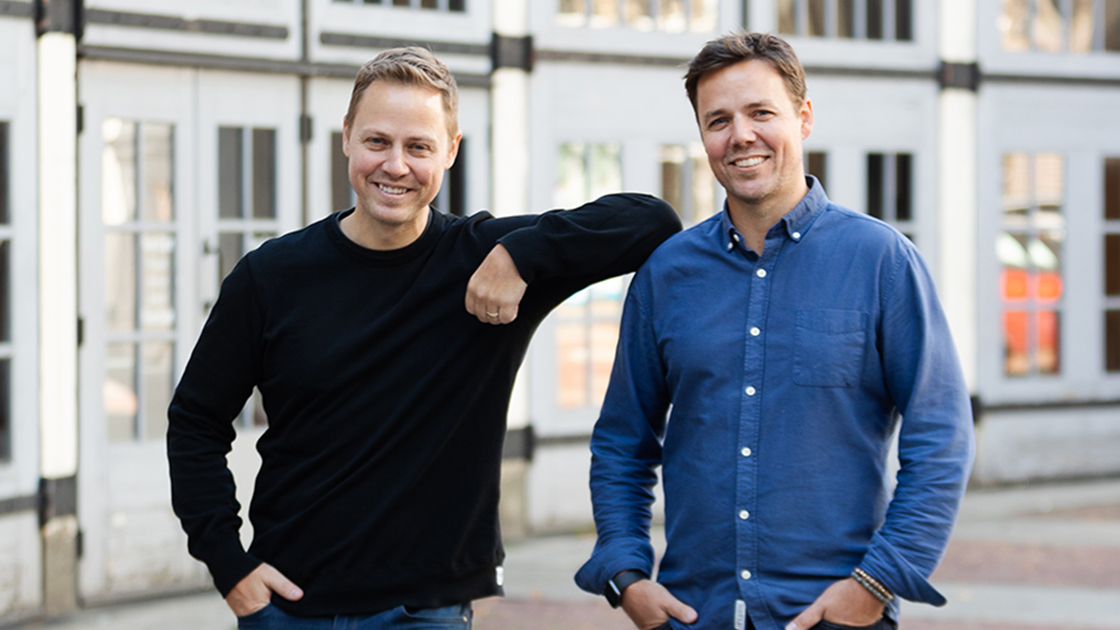
Listen On: Apple Podcasts | Spotify | Google Podcasts | YouTube
Guests on our show have one thing in common: they have big goals and a clear roadmap for how to achieve them. And today’s episode will give you a roadmap for your own success! Day-to-day CFO & side hustle founder of The Growth Guide, Clint Murphy, sits down with Matt & Adam to think big and execute with the perfect action plan.
How should you approach your goals? What separates a good goal plan from a bad one? And what simple strategies will lead to massive success? This is a masterclass in goal planning for 2023 from a guy who definitely walks the walk. Level up!
Guest Information

Clint Murphy
Clint Murphy is a partner at Frame Properties.
Clint has been in finance and real estate for 25+ years, including eight years at KPMG and 10 years as the CFO for one of Vancouver’s largest developers where he oversaw IT, Tax, Capital, Finance and Accounting. In the last fourteen years, Clint has been involved with the acquisition, development and delivery of over $2 billion of real estate.
When he’s not at work, you can find him reading a book, hosting a podcast, writing a newsletter or spending time with his wife and two teenage boys at the rink or football field. We still don’t know when he sleeps.
Episode Summary
Clint Murphy stops by to share his wisdom on how to set goals and actually follow through on them (for once!). Get ready to crush your real estate and life goals in 2023!
At 44 years old, you’re retired, but maybe not how people might think. What does retirement look like for you?
When I pulled the trigger and decided to “retire,” one of my friends said it was actually more of a pivot. I’m still doing my podcast, writing, public speaking, coaching, consulting, creating and selling courses, and private equity real estate investing. So I’m as busy or busier than I’ve ever been in my life.
But I’m switching from working for someone to pursuing my life passion. What I’m doing is much more in line with my purpose in life.
On transitioning from a day job to your life passion:
If you look at what you’ve been doing for the past 10-20 years, you’ve been building skills and abilities in a certain area. But when you stop doing your day to day job, it doesn’t mean you can’t use those skills elsewhere. How do you shift from pursuing something for work to pursuing it to a passion you can monetize?
It’s 2023. New year, new me?
I like to say, “Every day better.” My rule is to always go to bed better than I woke up. So I’m always a new person. It’s hard when you’re in the moment but when you look back, you can see that exponential growth. If you’re growing every single day, it really is exponential.
How do we set goals in 2023 and follow through on them?
One thing I’ve seen with a lot of young men is a lack of purpose and the inability to go from A to Z. So how do you find your purpose? You can take the Japanese concept, Ikigai (reason for being), and look at what’s at the intersection of:
- What you’re good at
- What you love to do>
- What the world needs
- What you could get paid for
The intersection of those four things is your purpose.
You could also ask your siblings: What did I love when I was younger? What was I good at? Even now as an adult, what do you get lost doing? What’s the thing you always come back to? That shows you what you want to pursue and what gives your life meaning.
We also want to look at the major buckets of our lives, like spiritual, mental, physical, etc. What do you want to achieve in each bucket? Set SMART goals for each bucket. How will you get from 0 to 100? I like to set long term goals, about five years out. Each year, the end goal can shift based on your progress.
Is it important that your goal be achievable?
Yes, absolutely. There are two key pieces to consider: 1) what goal you’re setting and how you’ll get there and 2) where you’re going to start. You need to build your “get shit done” muscle. If you haven’t built that muscle, you shouldn’t set the same goals as I do. If you’re not brushing your teeth every day, don’t set the goal to run an ultra marathon.
When youstart with goal setting, it needs to be as simple as possible. For me, I look out five years. Then I pull it back and ask, “If I want to get there in five years, what do I need to do this year to make that happen?”
Then I pull it back even more and figure out what I need to do each quarter, each month, each week and each day. When you get to the daily section, ask yourself what habits you need to develop. What behaviours do you need to adopt?
It’s one thing to want to lose 10 lbs. But the real work is figuring out what habits and behaviours will get you there.
Is identity a part of goal setting?
Definitely. A lot of people will say, “I’m not a writer” or “I’m not a runner.” But you are – you just have to do it! The habit makes you what you are.
How do you follow through on a goal?
When you don’t have a track record of achieving goals, you need to build that “get shit done” muscle. The exercise I recommend is to start with the simplest goal and commit to doing it at the same time every day. At the end of 30 days, you’ve now achieved that goal. Then, you make the next goal a little bit bigger. And the next one even bigger. And so on.
When you do that regularly, you develop the mindset that you are someone who achieves goals. You start to develop an appreciation of streaks and don’t want to give them up. Once you’ve taken the smallest baby step, you learn that you can do hard things.
What is the next step in goal setting in 2023?
So now you’ve determined your long term goal and you’ve broken it all the way down to your daily habits. But how do you make those habits stick? James Cleartalks about the four laws of behaviour change in his book, Atomic Habits:
- Make it obvious
- Make it attractive
- Make it easy to do
- Make it satisfying to do.
Make it obvious: You can do this by priming your environment. You can put your running shoes by the end of your bed or have your fridge set up for a healthy breakfast. You want to eliminate willpower and make it obvious what your behaviour should be.
Make it attractive: Adopt behaviours that are rewarded in society. Going to the gym or drinking water would be good examples. Surround yourself with people who are already living the behaviour you want to adopt. If you want to have more money, surround yourself with people who have more money.
Make it easy to do: Start small. The first step of any habit should be the easiest and simplest step it can be. Then you increase it incrementally.
Don’t focus on the results. Focus on the process and let the results take care of themselves. Be relentless on the process and be patient on the results.
Is it okay to miss a day with your habits?
It’s okay to miss occasionally. Just follow the Two Day Rule. It’s okay to miss occasionally, but don’t miss two days in a row. That’s how you ensure it’s a habit. If you skip the gym on Monday, make sure you get in there on Tuesday.
What if you don’t feel like doing it today?
Try the Two Minute Rule (a modification of the Five Minute Rule). The Two Minute Rule says whatever it is you want to do, even if you don’t feel like doing it, do it for two minutes. Because once you get started, you won’t want to stop. It’s very rare that you’ll get two minutes in and not want to finish.
What we reward, we continually do. What we punish, we stop doing. So how are you rewarding yourself for sticking to your goals?
You recently tweeted about11 habits people should become addicted to that will make them unrecognizable by June. What are the most important habits everyone should adopt?
The first habit everyone should adopt is waking up earlier. When you wake up early, you’re waking up for a specific intention. More of our bad habits happen at night when we’re tired than when we wake up early for a specific purpose. Maybe you’ll wake up early and walk the dog, meditate, stretch, etc. Those probably aren’t things you’ll do at 8:00pm.
The second habit is investing in yourself. I didn’t start investing seriously until my mid 30’s. Until then, all of my investing was in myself – books, courses, learning. I’ve taken four or five courses about Twitter now so I can succeed on that platform. Instead of looking at the price tag of a course, look at the value you’ll get out of it.
The third habit is investing in your hobby or side hustle. It doesn’t have to be monetized but should potentially have that ability. That gives you optionality.
If you lose your job, what’s your option? What’s the skillset or hobby you can fall back on? The more you can recession-proof yourself, the better.
Another habit people should adopt is developing rare skills. It’s hard to become the top accountant but if you’re an accountant who also is a writer or public speaker, or a realtor who has a podcast, that changes things. Build rare skills that can feed into your side hustle and your learning.
For the next 6 Months,
Become Addicted to These 11 Habits,
And, You’ll be Unrecognizable by June 2023:
— Clint Murphy (@IAmClintMurphy) January 5, 2023
You have an impressive following onTwitter. How did you develop a plan to grow on Twitter and how do you find the motivation to keep going?
When I created my 5-10 year road map, I looked at each category of things I do (e.g. podcasting, writing, coaching, etc.) and asked myself three things:
- Where do I want to be?
- What will it take to get there?
- What is the skills gap I need to fill?
Every single category had social media as something I needed for success.
I started on Twitter about a year and a half ago. I decided to write every day for a year and see what would happen. I started 2022 with about 20,000 followers. I learned all of the big accounts were writing threads – a series of tweets linked together. So I took another course on how to write that type of longer form content on Twitter.
I love streaks so I committed to writing a thread every day for 75 days. Now, it’s easier for me to write a thread than a tweet.
Jim Collins talks about the flywheel effect. When you first start pushing on a flywheel, it doesn’t move. But once it starts spinning, it develops its own momentum. I realized that if I grow on Twitter, I could reach out to more influential guests for my podcast. That could fuel my podcast growth, which when I share episodes on Twitter, also fuels my Twitter growth. They feed each other.
As a kid who grew up in Mission with ADHD who never did well in school, I’ve always felt like a third line winger. So how do I keep up with the people who are smarter or more capable than me? I outwork them. I am willing to grind.
During that time, I had a few threads that went really viral. There was one about Microsoft Excel that had 27 million views and helped us pick up 28,000 followers in one weekend. From there, you learn what to write and how to write.
There’s a concept called intermediate packets by Tiago Forte. The thread I just wrote on habits were all habits I have talked about before. So each habit is an intermediate packet. I can use the search box to figure out what I’ve said about that topic in the past, tighten it up and repurpose it. Don’t be surprised if you see that same thread six months from now!
Over December, I was able to share a lot of “best of” tweets and share a lot of content around the end of year and new year goals. It ended up being a great growth month for me on Twitter.
There were a lot of times in this journey when I was tired. I used to do it all myself and just tweet off the cuff at the end of a long day. These days, my wife is retired and has taken a lot off my plate.
We’re also building systems. I research what the most common questions are on financial literacyand independence and plan when I want to write about those topics. We bring in specific content systematically. That way the writing process is less stressful and the tweets perform better.
The 5 Wire: Getting to Know The Growth Guide’s Clint Murphy
One stand out book you’ve read recently and recommend?
I’m actually having this author on my podcast tomorrow, Brad Stulberg, who wrote The Practice of Groundedness. People who are driven to do hard things sometimes experience downsides. So what is this practice of groundedness to bring it back to a healthy pursuit?
Best Christmas gift?
The best gifts are the things that your kids get. Seeing them open up their Christmas gifts is pretty cool. My little guy got a pair of Jordans and he looked so fly. They both got basketball jerseys so seeing a photo of them both in all of their gear – they looked pretty cool!
What are you binge watching?
I have binge watched so much television over the last few months! I have it as background noise while I read, which maybe isn’t the best habit. White Lotus was a lot of fun. Emily in Paris is pretty fun too. I usually watch that one while my wife is watching.
Favourite band or music?
I almost can’t say this. I know he’s gone off the deep-end but when my 11 year old and I are in the car and heading to hockey practice, we listen to Jesus Walks by Kanye West. Shallow by Lady Gaga is also fire; we listen to that one too.
What is something you’ve purchased recently for under $1500 that has had a positive impact on your life?
It’s a toss up between one of our air fryers and this wax paper you use to wrap up your leftover cheese. It’s better than a Ziploc bag!
And yes, we do have multiple air fryers – I think we have three, though my wife may have sold one. My wife air fries everything for the boys. But one air fryer isn’t enough to cook a full meal for both of them, so we bought two.
This is also one of the first times our boys have cooked for themselves. My oldest will walk into the kitchen and make himself a pizza in the air fryer and a smoothie bowl in his new Ninja blender. The smoothie bowl is thanks to TikTok!
Episode Host
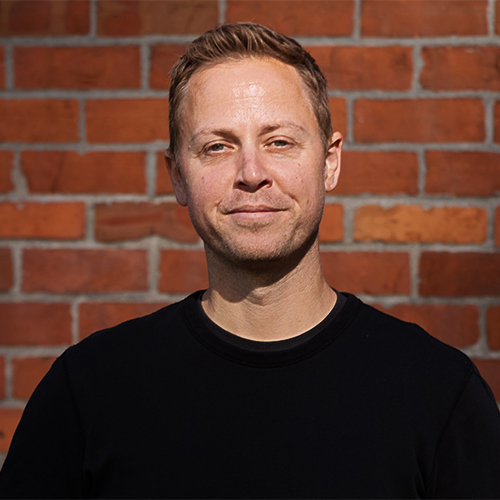
Adam Scalena
Adam is a full-service realtor, specializing in Vancouver’s best areas. His systematic approach to real estate and dedication to his clients has consistently placed him within the top 10% of realtors operating within Greater Vancouver.
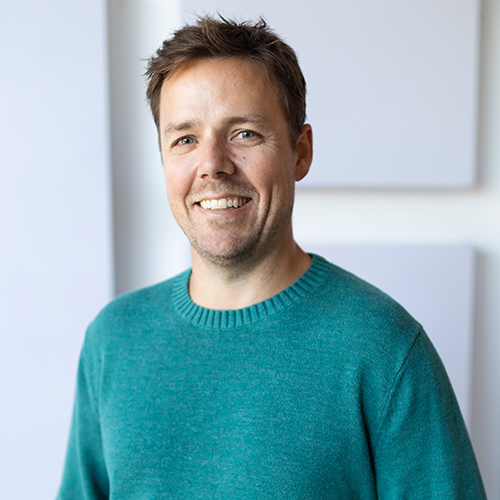
Matt Scalena
Matt is real estate obsessed and considers himself a lifelong student of the Vancouver real estate market. As a co-manager of the Scalena Real Estate team, Matt prides himself on expertly advising buyers and sellers on all aspects of the fast-paced, dynamic Vancouver real estate market. He is present at every stage of the process, from that first phone call or email right through to when keys are exchanged between sellers and buyers.
Sponsors